Robotics has changed the way we do science, making it more efficient and exciting. These machines help us explore the ocean and space like never before. They push the limits of what we thought was possible.
Now, robotics is key in many scientific fields. It helps us solve tough problems and understand the universe better. From space missions to medical procedures, robotics leads the way in making science better.
Let’s look at how robotics changes science. We’ll see how it affects space travel and medical research. Join us to see how these machines are shaping the future of science.
Revolutionizing Scientific Exploration
Robotics has changed the way we explore the universe and the ocean. It has made it possible to collect data and images from far-off planets and deep in the ocean. This has given scientists new insights into the mysteries of space and the ocean.
Pushing Boundaries in Space Exploration
Robots like the Mars rovers and space probes have changed our view of the universe. They have sent back information about Mars, helping us understand its geology and atmosphere. This information is key for future human missions and searching for life beyond Earth.
Enhancing Underwater Discoveries
Underwater, robotics has also made a big impact. With remote-controlled submarines and AUVs, scientists can now explore the ocean’s depths. They can study marine life, the ocean floor, and even old shipwrecks. This has changed how we see the ocean and its secrets.
Robotics is still growing, and its potential for science is huge. It’s helping us explore space and the ocean in ways we never thought possible. This technology is opening new doors for science, pushing us to learn more about our world and beyond.
Enabling Precision in Scientific Experiments
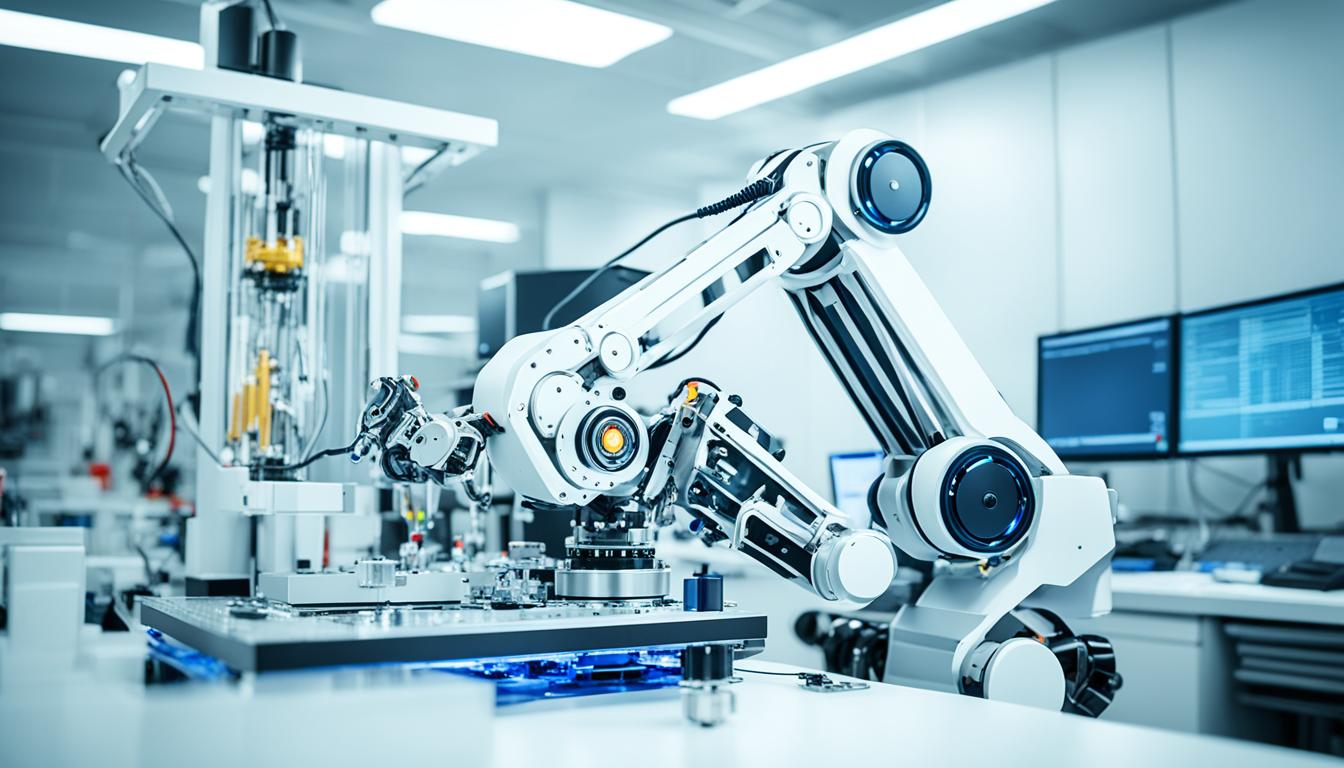
In scientific research, robotic tools have changed the game. They bring a new level of precision and accuracy to experiments. With automated pipetting and robotic arms for handling samples, labs work better and faster. This reduces mistakes and makes collecting data easier.

Getting things right is key in science, and robots help a lot. They do repetitive tasks automatically, cutting down on human error. This makes experiments more consistent and reliable, leading to better discoveries.
Robots also change how we collect and analyze data. They can measure things accurately and keep track of experiments. This lets scientists spend more time on understanding their results, not just collecting data.
The link between science and robotics is growing stronger. This means we can expect even more precise experiments in the future. With advanced robots, scientists can explore new areas of research. This could lead to big breakthroughs and new discoveries.
Science and Robotics: A Symbiotic Relationship
The link between science and robotics shows how amazing things can happen when they work together. Scientific studies push robotics forward, leading to new tech and abilities. At the same time, robotics helps scientists explore new areas, do experiments more precisely, and learn more about the world.
Robotics Advancing Scientific Knowledge
Robots are now key in scientific research. They let scientists go where it’s too risky or hard for people. In space and the deep sea, robots help us learn more about the universe and the ocean.
This has opened new ways to discover things and expanded what we can do in science.
Science Fueling Robotic Innovations
Science and robotics help each other out. New discoveries in science lead to better robotics. Things like new materials, artificial intelligence, and faster computers make robots smarter and more useful.
This has led to big wins, like robots for surgery and robots that explore other planets. The connection between science and robotics is strong. As they keep getting better, we can expect more amazing discoveries and tech.
This partnership is changing the future. It’s pushing limits and changing how we see and interact with the world.
Robotics in Healthcare and Medical Science
Robotics has changed how healthcare workers do their jobs. Surgical robots help surgeons do complex surgeries with great precision. This leads to patients recovering faster and having better outcomes.
Surgical Robots and Minimally Invasive Procedures
Robotic-assisted surgery is changing healthcare. Robots like the da Vinci Surgical System let surgeons make small cuts. This means less pain, less scarring, and patients get better faster.
These robots offer better views, more control, and precise movements. They are key in many surgeries, from heart to kidney operations.
Robotics has also changed how doctors train. New surgeons can practice on robots before real surgeries. This makes their skills better and could make healthcare safer and better.
Automating Laboratory Processes
Robotics has changed how we do scientific experiments and lab work. Tools like automated pipetting systems and robotic arms make tasks easier. This lets researchers spend more time on deep analysis and less on simple tasks.
These tools have made collecting data more accurate and efficient. They cut down on mistakes and make sure results are the same every time.
Enhancing Accuracy and Efficiency
Robotics has made labs work better. Automated systems handle liquids, prepare samples, and log data perfectly every time. This means fewer mistakes and faster results.
This means scientists can do more experiments quickly. It has sped up scientific discoveries and changed how research is done.
Automating hard tasks means researchers have more time for thinking and innovating. Robotics and science together have started a new era of better, faster, and reliable research. This has changed the face of scientific research.
Exploring Hazardous Environments
Robotics has changed the game in scientific exploration. Now, researchers can go into places too dangerous or hard to reach for humans. Robots can go into areas with lots of radiation, extreme heat, or other dangers. This lets researchers collect important data and samples safely.

These robots have advanced sensors and tools. They can move through tough terrain and harsh conditions. They collect data that helps us understand the world better. From the ocean depths to active volcanoes, these robots are making new discoveries possible.
Using robots in dangerous places helps protect researchers and opens up new areas for study. This has led to big discoveries in geology, climate science, and space exploration. The data from these robots is key to advancing our knowledge.
The importance of robotics in dangerous places will grow. These robots keep scientists safe and let them explore the unknown. They’re opening up new areas for research, leading to more discoveries and understanding.
Science: Driving the Robotics Revolution
Robotics has grown a lot thanks to scientific research. Scientists use robotics to make new tools and technologies. This has led to big changes in how we explore, experiment, and discover new things.
This mix of science and robotics has sparked a lot of innovation. It has changed how scientists work in many areas, like space and medicine. Robotics has made scientific experiments more precise and let scientists go into places they couldn’t before.
Thanks to robotics, we’ve learned a lot about the world. Robots have explored space and the ocean, showing us new things. In labs, robots do boring tasks, letting scientists focus on harder, more interesting work.
The link between science and robotics is getting stronger. We’ll see more cool things in the future. This research will change our world, making new discoveries possible.
Robotic Assistants in Scientific Research
Robotics has become key in scientific research every day. Robotic assistants use advanced algorithms and AI to automate tasks like data collection and analysis. These systems make research more efficient and accurate. They let scientists focus on deeper work and new ideas, pushing science forward.
Automating Data Collection and Analysis
Robotic research assistants are changing how we collect and analyze scientific data. They use precise instruments and sensors to gather data accurately. This reduces the chance of mistakes by humans.
These AI tools can also quickly go through large amounts of data. They find patterns and insights that might be missed, speeding up scientific discoveries.
By doing repetitive tasks, robotic assistants give researchers more time for deep thinking and interpretation. This partnership between robotics and science is leading to big breakthroughs. It’s changing the future of scientific research, from space exploration to medical advancements.