Step into the exciting world of science fairs and discover endless possibilities. These events are perfect for anyone who loves science, wants to learn more, or just enjoys exploring new ideas. We’ll show you how to join in, share your discoveries, and keep a lifelong love for science.
This guide covers everything from the basics of science fairs to how to do research and experiment. You’ll learn the best ways to join these events and get advice from experts. It’s your chance to show off your skills and open doors to many opportunities.
Get ready for an adventure that will inspire and challenge you. You’ll learn a lot and make a mark in the science world. It’s time to unleash your potential and change the future.
Unraveling the World of Science Fairs
Imagine a place where young minds show off their science skills. They share their research and ideas, sparking a love for discovery. Science fairs are where students from different backgrounds meet to share their work. These events help students love science and offer benefits that shape their future.
What are Science Fairs?
Science fairs are events where students learn by doing science. They try out experiments and research in fields like biology and physics. By running their own experiments, students get better at thinking and solving problems. They also learn more about how science works.
Benefits of Participating in Science Fairs
Science fairs have many benefits beyond the classroom. Students get to use what they know in real situations, improving their thinking and speaking skills. They also compete, which pushes them to do their best. This can lead to awards and even scholarships.
Being in a science fair can make students really love science. It encourages them to keep learning and maybe even work in STEM fields later.
Science fairs let students dive into the human body or solve big problems. They become part of the scientific community. These events open doors to new opportunities, helping shape the future of science.
Choosing an Engaging Science Fair Project
Choosing an interesting science fair project is key to doing well. Think about what you love and what problems you want to solve. Pick a project that fits your skills and what you can do, making you think deeply and creatively.
When choosing a science fair project, pick a topic that catches your eye and teaches you something new. Look for science fair project ideas that tackle real-world issues or explore nature’s secrets. Picking a topic you’re excited about makes you more eager to research and complete your project.
Don’t hesitate to think differently and explore new ideas. Maybe you’re into renewable energy or the human brain’s workings. Let your passion guide you in finding science fair project ideas. The best projects come from a true wish to learn and explore.
Conducting Thorough Research
Starting a science fair project needs thorough research. First, look for trusted sources like academic journals, scientific databases, and reputable websites. These sources will give you the facts you need and help you make a smart hypothesis for your project.
Identifying Reliable Sources
For science fair research, it’s key to use credible sources. Stay away from general search engines and untrusted websites. Instead, use academic journals, scientific databases, and educational sites you can rely on. These sources offer accurate, current, and reviewed info for your project.
Developing a Hypothesis
After you’ve done your research, it’s time to make a hypothesis. A good hypothesis is the core of your project, guiding your experiment and study. Make sure it’s clear, testable, and based on what you’ve learned. This makes sure your experiment is focused and your results are important.
Remember, the success of your science fair project depends on your research’s depth and quality. By finding reliable sources and making a thoughtful hypothesis, you’re ready to do a thorough and interesting investigation.
Designing and Executing Your Experiment
After you have a clear hypothesis, it’s time to start designing and executing your science fair experiment. A detailed timeline is key to finishing all steps on time. Always follow scientific protocols and best practices to make sure your results are valid and reliable.
Creating a Timeline
Make a thorough timeline for your science fair experiment. This keeps you organized and on track during research and experimentation. Make sure you have enough time for getting materials, setting up your experiment, collecting data, and analyzing the results.
Following Scientific Protocols
It’s crucial to stick to scientific protocols for credible and accurate results. Learn the right research methods, data collection techniques, and analysis procedures for your experiment. Keep detailed records, control variables, and follow safety rules throughout.

With a well-planned timeline and strict adherence to scientific protocols, you’re set for a successful science fair experiment. Remember, success comes from being diligent, detail-oriented, and committed to the scientific method.
Analyzing and Interpreting Your Results
After you finish your science fair experiment, the hard part starts – looking at the data and understanding the results. This step is key to finding out if your guess was right or wrong. By looking closely at your data, you can learn a lot about the science behind it.
Start by organizing your data well. Look for any results that don’t fit the pattern. Use tools for statistical analysis to find important connections. This way, you can make sense of what your experiment showed.
Then, think about what your data means in relation to your guess and what we already know. See how your results fit into the bigger picture of science. Think about what new questions your findings raise. Being able to explain your findings clearly is important for your science fair.
By deeply analyzing and understanding your results, you can make strong conclusions. This process helps you get a better grasp of the scientific method. It also shows you’re a careful and thoughtful researcher, ready to share your discoveries with others.
Science Fair Project Presentation Tips
Being able to present well is key to doing great in science fairs. Making your project look good and informative is important. Also, getting better at speaking in public can make you more confident when you share your work with judges and others.
Visual Aids and Displays
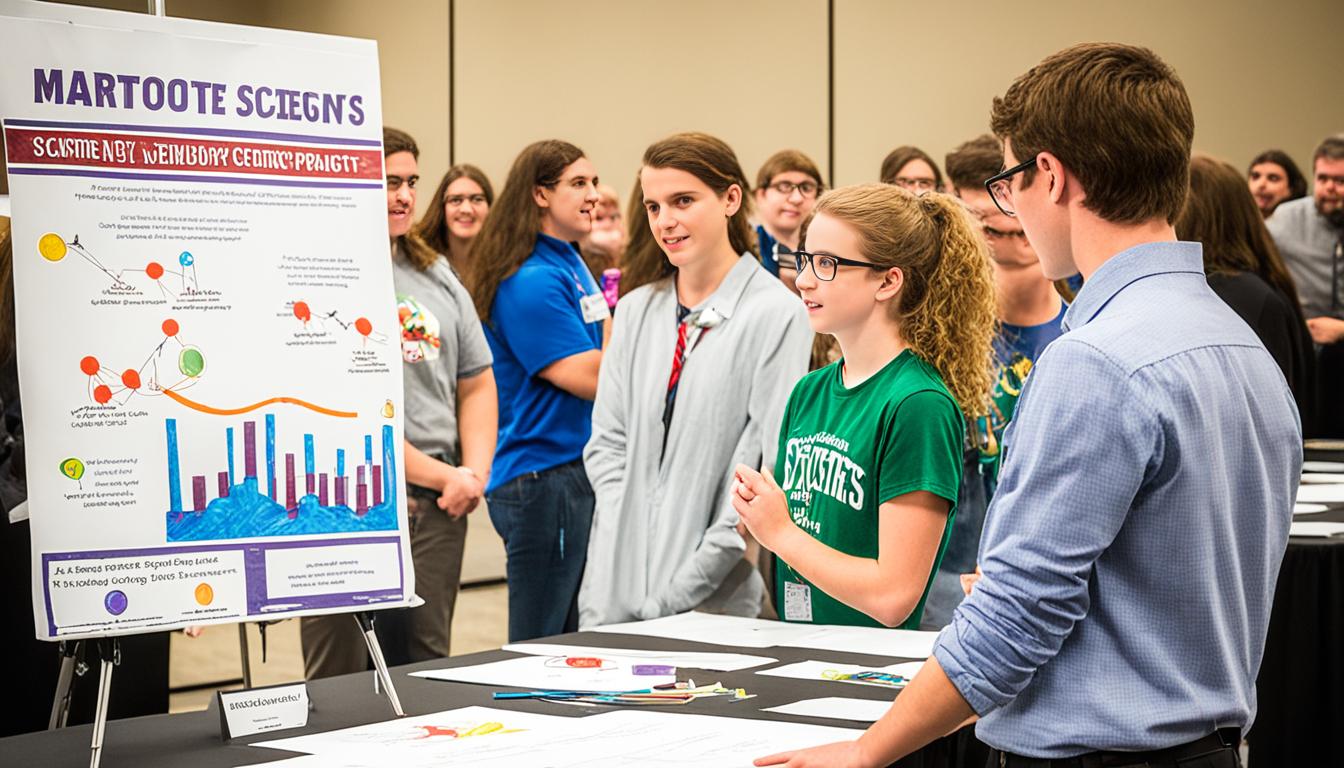
It’s vital to have eye-catching visual aids for your project. Use top-notch visuals like graphs, charts, and diagrams to show your data. Make sure your displays are easy to see, well-put together, and catch the eye. Think about adding multimedia like videos or interactive parts to make your presentation stand out.
Public Speaking Skills
Good public speaking skills are a game-changer for your project. Work on your presentation by practicing. Focus on speaking clearly, standing tall, and keeping your audience interested. Be ready to answer questions and share your love for the topic. With good prep and practice, you’ll give a science fair presentation that people will remember.
Finding and Preparing for Local Science Fairs
Exploring science fairs is a great way for students to learn and show off their skills. If you want to share your scientific knowledge, start by finding local fairs that match your interests and age. These events are perfect for both new and experienced scientists to share their work and learn from others.
When you start looking for science fairs, make sure to check the rules and deadlines for signing up. Get all your materials ready early to make registration smooth. You might need to send in project ideas, personal details, or meet certain requirements. Being organized and proactive makes the process easier.
After you’ve signed up, it’s time to work on your project. Spend time improving your project, making your presentation better, and practicing your speech. These fairs are not just about winning; they’re a chance to meet other science lovers, learn from them, and get feedback to help you grow.
Being part of a local science fair can change your life. It lets you show off your skills, meet people who think like you, and open doors for the future. So, jump into the world of local science fairs and let your love for discovery be seen!
Seeking Guidance from Mentors and Experts
Science fairs can be both exciting and challenging. You don’t have to face them alone. Getting help from experienced mentors and experts can really boost your chances of doing well.
Collaborating with Teachers and Professors
Talking to your teachers or professors is a great way to start finding mentors. They know a lot and can give you good advice and support. They can help you make your project better, guide your research, and show you how to present it well.
Networking with Science Professionals
Meeting science professionals, like researchers or scientists, can change the game. They can share their knowledge, give you tips, and even help you find resources. You can meet them at science events, online, or through professional groups. This can lead you to mentors who can give you the guidance you need.

Working with mentors and experts, and teaming up with teachers and professionals, can give you great insights. It can make your project better and help you present it confidently. Don’t hesitate to reach out for help – it could be the key to your success in science fairs.
Celebrating Your Achievements
Being part of a science fair is a big deal, no matter what happens at the end. Take time to think about all the hard work and dedication you put in. Celebrate your success and the amazing things you’ve done.
You’ve learned so much, like critical thinking and problem-solving. You’ve also gotten better at sharing your ideas with others. These skills will help you a lot in the future, in school and your career.
Be proud of what you’ve done, even if you didn’t win a prize. Just taking part shows how much you care about science. Enjoy feeling proud of yourself and your hard work.
Your science fair journey is just the start of learning more about the world. Use this experience to keep exploring science. Your success and achievements will help you grow and discover new things in the future.
Science Fair Competitions and Awards
Science fairs are a great way to show off your skills and hard work. They have different categories and awards for your projects. You can win first, second, or third place, or get special awards for your research and presentation.
It’s important to know about the competition categories and what judges look for. This helps you plan your project and presentation better. Knowing this can really help you do well in the competition.
Science fairs also value creativity, problem-solving, and explaining complex ideas simply. By focusing on these, you can win awards and recognition. Doing well can also lead to scholarships, internships, and jobs in STEM fields.
So, as you start your science fair journey, look for the different categories and what judges want. With hard work, passion, and a good understanding of the science fair world, you can do very well and get noticed.
Leveraging Science Fair Experiences for Future Endeavors
Participating in science fairs can change your life, giving you skills and knowledge that help you long after the event. You’ll learn how to solve problems, think critically, and speak in public. These skills help you succeed in school and work.
Doing research and designing experiments for your science fair project has taught you a lot. You can use these science fair experiences in many areas. You’ve learned to solve complex problems, think outside the box, and approach challenges with a clear plan. These skills are very valuable in school and the workplace.
Also, presenting your science fair project has made you more confident and good at speaking in public. This skill helps you in many situations. Whether you’re speaking to a class, pitching an idea, or talking with experts, you’ll stand out. Your public speaking skills will help you succeed.
Using the science fair benefits for future, you can open many doors. You can get internships, scholarships, and do well in your field. The skills you’ve gained from your science fair will be a strong base for your future.
Igniting a Lifelong Passion for Science
Science fairs can spark a lasting love for science, technology, engineering, and mathematics (STEM). You get to design and run your own experiment, feeling the excitement of discovery. This experience lets you dive into the latest research and work with others who share your interests.
At a science fair, you learn important skills like critical thinking and problem-solving. These skills are key for STEM education and careers. No matter your interest, from space to green energy, science fairs can motivate you to keep exploring.
The impact of a science fair goes beyond the event itself. It builds your confidence, curiosity, and analytical skills. These skills help you in school and work, leading to a life of scientific discovery and innovation.