Technology’s impact on science is huge and growing. It has brought us advanced tools and changed how we see the world. This mix of science and tech has opened new doors, changing our view of everything around us.
Now, scientists use digital tools to gather and study data more accurately than ever. Thanks to powerful computers and detailed simulations, they can study complex things, test ideas, and find answers that were hard to get before.
Science and technology work together to create new lab tools. These tools help scientists go further than ever. With top-notch imaging and analysis tools, they’re making discoveries that change our world.
Embracing Digital Transformation
The scientific world is changing fast, thanks to digital technology. This change is making research better and helping us make new discoveries. It’s all about using more data, analyzing it faster, and doing complex tasks with ease.
Data Collection and Analysis
Now, researchers have a lot of data from digital sensors and systems. This data helps us understand complex things better. With new tools like machine learning, scientists can find patterns in big data that were hard to see before.
Computational Power and Simulations
Computers are getting faster and stronger, changing how we do research. Scientists can now run complex simulations easily. These tools let them test ideas without the need for expensive experiments.
This shift in science is opening up new areas to explore. By using data and computers, scientists can work together better and make bigger discoveries. The future of science looks exciting and full of possibilities.
Cutting-Edge Laboratory Equipment
Scientific research is key to human innovation. The tools in labs are vital for this progress. Now, new technology has changed the game in lab equipment. This change lets scientists work more precisely and efficiently in many fields.
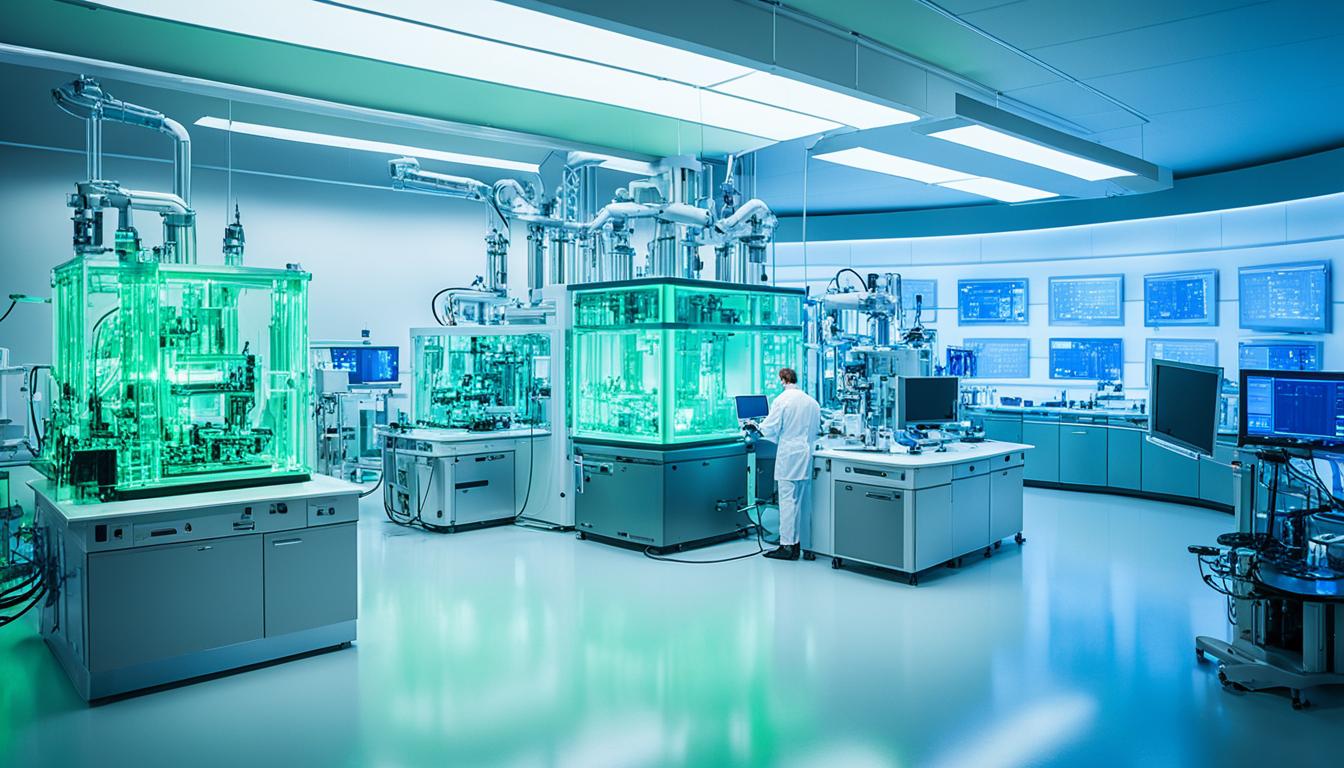
New tools like advanced spectrometers and automated systems are changing how scientists work. These tools help scientists analyze samples more accurately. This gives them the data they need for new discoveries. Robots also help by doing repetitive tasks, letting scientists focus on harder, creative work.
These new tools do more than just work better. They help scientists tackle tough challenges. This leads to new discoveries in areas like materials science and genetics. The latest lab equipment is key to these advances, shaping the future of science.
The scientific community is excited about these new tools. They promise big leaps in fields like medicine and energy science. With these tools, scientists can explore new areas and expand our knowledge of the world.
Collaboration Through Virtual Platforms
The scientific community has harnessed technology to boost collaboration and share knowledge like never before. Virtual platforms have changed the game, letting researchers worldwide talk in real-time, share discoveries, and work on big projects together.
Global Knowledge Sharing
Thanks to video conferencing, cloud tools, and online project management, distance and time zones don’t stand in the way anymore. Scientists can easily connect with others around the world, swap ideas, data, and insights instantly. This has made solving problems faster, boosted innovation, and mixed different ideas in the scientific world.

The COVID-19 pandemic showed just how vital these virtual platforms are. They let researchers keep working and sharing info even when they couldn’t meet in person. This new way of working has changed how scientists do research, making the global scientific community more connected and collaborative.
Accelerating Scientific Breakthroughs
Science is always changing, and technology has a big role in making discoveries faster. The rise of rapid prototyping and testing is a big step forward.
Rapid Prototyping and Testing
3D printing has changed how scientists work. It lets them make models and prototypes quickly. This means they can test and improve their ideas fast.
With advanced simulation tools, scientists can test their ideas without making real prototypes. This makes the scientific process faster and cheaper.
This new way of working has made scientists work together more. It has also made it easier to share knowledge worldwide. This means we can expect more discoveries in fields like medicine and materials science.
Science and technology together are driving fast innovation. By using these tools, scientists can tackle big challenges and explore new areas.
Science and Technology: An Inseparable Duo
Science and technology are now closely tied, pushing progress in many areas. They work together, making big steps in understanding our world. This partnership helps us learn more about the world by linking scientific discoveries with new tech.
Researchers use powerful computers and data analysis to find new patterns and test ideas. This is seen in astronomy, where new tech has uncovered the universe’s secrets. In medicine, tech like genomic sequencing has changed how we care for patients.
This partnership has made science move faster and helped solve tough problems. With technology, scientists can quickly design and test new ideas. This has led to big changes in areas like renewable energy and materials science.
The link between science and technology is key to our society’s growth. It shapes our future and opens new possibilities. This partnership is crucial for moving forward.
Ethical Considerations in Tech-Driven Science
Technology is becoming a bigger part of scientific research and discovery. It’s vital to think about the ethical issues that come with this. We need to make sure that using new tech tools is right and helps society.
Responsible Innovation
At the heart of ethical tech science is responsible innovation. It means scientists, tech experts, and policymakers work together. They look at how new tech could affect people, communities, and the planet.
This way, we can lower risks and make sure new tech is good for everyone. It’s about making sure tech advances are not just new but also right. We must think about things like privacy, making sure everyone gets the benefits, and the effects on society.
As science and technology get closer, we must stay alert about ethics. By valuing responsible innovation, we can use tech science for good. This way, we help humanity and follow ethical rules.
The Future of Science: Powered by Technology
Looking ahead, science and technology will grow closer and closer. The future of science is exciting, with new tech changing how we explore the world.
Advances in artificial intelligence and machine learning are leading the way. Quantum computing is also changing the game. These innovations will lead to big discoveries and shape our future.
As science becomes more tech-driven, scientists will get more powerful tools. They’ll have access to huge computing power and advanced data analysis. This will speed up scientific progress.
Being able to quickly test new ideas will lead to many breakthroughs. These will change how we see the world and our role in it.

The future of science is exciting, with tech and science working together. This will lead to new medical treatments and energy solutions. The future, powered by technology, promises a better tomorrow for all.
Emerging Technologies Reshaping Science
Emerging technologies are changing science fast. They’re making scientific discovery and innovation go faster. At the heart of this change are artificial intelligence (AI) and machine learning (ML). These technologies are changing how we do scientific research.
AI and ML help scientists look through huge amounts of data quickly and precisely. They find patterns and insights that were hard to see before. This is true in fields like genomics, astrophysics, materials science, and drug development.
These technologies let researchers solve complex problems faster. They automate tasks that used to take a lot of time. This leads to big leaps in science at a fast pace.
With AI and ML, scientists can simulate complex experiments and model complex systems. They can predict outcomes with a high degree of accuracy. This makes research easier and opens up new ways to explore.
It lets scientists go beyond what we knew before. They can find new solutions to big challenges. This is how we’re moving forward in science.