
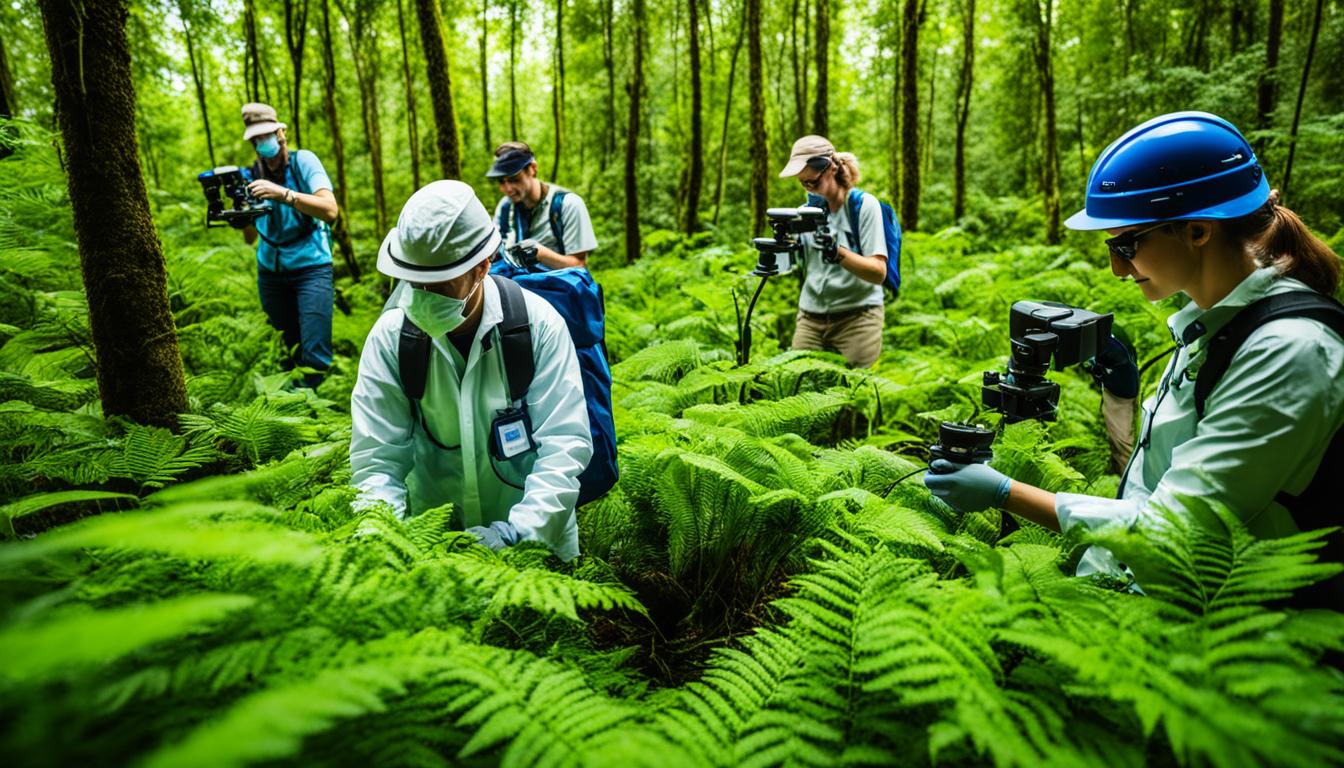
Environmental science is key to understanding how humans and nature interact. It looks at Earth’s systems, human impact, and finding solutions to big environmental issues. This field is vital for tackling issues like climate change, losing biodiversity, and using up resources. It helps us work towards a sustainable future and a healthier Earth.
Environmental science is crucial for solving the environmental problems we face. Scientists in this field study how nature, human actions, and technology affect each other. They aim to create new solutions to reduce environmental harm and support sustainability. Their work includes research on renewable energy and protecting ecosystems, which are key to a sustainable future for our planet and all living things.
What is Environmental Science?
Environmental science looks at how the physical, chemical, and biological parts of our world interact. It’s a field that combines many sciences like biology, chemistry, physics, and more. By studying these connections, scientists aim to solve big environmental problems.
Defining the Field
Environmental science studies how human actions affect the environment. It looks at how things like industrial activities and waste impact nature. Scientists also study natural events and processes to understand Earth’s systems better.
Interdisciplinary Nature
Environmental science is strong because it brings together many scientific fields. This mix of knowledge helps scientists tackle environmental issues from different angles. By sharing ideas and methods, they can find better ways to protect the environment and manage resources.
Tackling Global Environmental Challenges
Environmental science is key in finding, understanding, and solving the world’s big environmental problems. Scientists use science to create strategies and tech that lessen human harm to the environment. They aim for sustainable ways to live.
Issues like climate change, losing biodiversity, pollution, and using up resources are big challenges. Scientists lead the way in solving these problems. They research and come up with new solutions to protect our planet’s ecosystems.
Fixing environmental problems needs teamwork and knowledge from many fields. Scientists work with policymakers, businesses, and communities. They aim to find solutions that are good for the economy, people, and nature.
Environmental scientists use their knowledge and creativity to make a better future. They help shape global policies and encourage sustainable living. Their work helps people make choices that are good for the earth every day.
Promoting Sustainability and Conservation
Environmental science is key to making our planet more sustainable and protecting it. It focuses on creating renewable energy like solar, wind, and hydropower. These sources cut down our use of fossil fuels and lessen climate change effects. By using renewable energy, we move closer to a greener future.
Renewable Energy Solutions
Renewable energy has grown a lot in recent years. Now, it’s easier and cheaper for homes and businesses to use. Solar panels are getting better and cheaper, letting more people use the sun’s power. Wind turbines are also becoming common, making clean electricity and lowering our carbon emissions.
Biodiversity Protection
Environmental scientists are vital in protecting nature’s variety. They work to keep ecosystems healthy and manage natural resources well. By knowing how ecosystems work, they help save endangered animals, fix habitats, and support sustainable ways of using land for things like farming and forestry. This approach is key to keeping our planet healthy and strong.
Science and Environmental Policy
Environmental science is key in shaping environmental policies and regulations. It gives policymakers the data and insights they need. This helps them make better decisions about protecting the environment and managing resources.
Environmental policies rely on science for guidance. Scientists do research, analyze data, and advise lawmakers. This ensures policies are based on facts, not just politics or special interests.
Science is vital for tackling big global issues like climate change and losing biodiversity. Scientists provide the data and models needed to understand these problems and solutions. This helps create better environmental policies and regulations.
Working together, scientists and policymakers can make sure policies are up-to-date and effective. This approach builds trust and leads to better environmental management. As we deal with more environmental challenges, combining science and policy is key to a sustainable future.
Understanding Ecosystems
Environmental science looks into the complex world of ecosystems. These are networks of living things and their surroundings. By understanding these systems, scientists can keep our planet healthy and sustainable.
Ecological Balance
Keeping ecosystems in balance is key in environmental science. Each part of an ecosystem is crucial for its health. When this balance is upset, it can harm the whole environment. Scientists work to find out what keeps ecosystems balanced and how to keep them that way.
By studying how living things interact with their surroundings, scientists learn about ecosystems. This knowledge helps them protect and fix natural places. It also helps in managing resources and reducing human harm to the environment.
Climate Change Mitigation and Adaptation
Environmental science is key in fighting climate change. Scientists use research, modeling, and new tech to lessen climate change effects. They aim to help communities adapt and reduce emissions.
They work on lowering greenhouse gases to stop global warming. Scientists team up with leaders, businesses, and people to use clean energy and improve energy use. They also look into capturing and storing carbon. These efforts aim to slow down warming and lessen its effects.

Environmental science also focuses on adapting to climate change. Researchers study how climate change affects areas, like sea levels and extreme weather. They create plans to make communities stronger against climate change.
These plans might include stronger buildings, better disaster plans, and using nature to fight floods. By using both mitigation and adaptation, environmental science offers a full plan to tackle climate change. As we face climate change, scientists are leading the way to a better future.
Environmental Science in Daily Life
Environmental science isn’t just about big policies. It’s also key to our daily lives. By learning about it, we can make choices that help the planet.
It helps us pick the right energy sources and products. For example, using energy-saving appliances and recycling. These actions make our lives greener.
It also teaches us about important environmental issues. Things like climate change and saving natural resources. This knowledge helps us become better citizens of the earth.
Environmental science is more than a study; it’s a lifestyle. By living by its principles, we can make the planet healthier. And we’ll ensure a better future for all.
Careers in Environmental Science
The field of environmental science has many career paths for those who love the planet. People in this field work in government, non-profits, private companies, and schools. They face big environmental challenges and work towards a sustainable future.
If you’re into research, making policies, or getting your hands dirty, environmental science has something for you. Scientists, ecologists, and conservationists are key in solving problems like climate change and saving nature. They help us understand and fix these issues.
Environmental engineers create new ways to cut down waste and use energy better. They also lessen the harm humans do to the environment. Land management experts keep natural areas safe and use land wisely. Environmental policy analysts help make decisions that protect the environment and support sustainability.
As we all become more aware of the need to protect our planet, the need for environmental experts grows. Choosing a career in environmental science lets you really make a difference. You can help create a better future for our planet.
Education and Research in Environmental Science
The field of environmental science is always changing. This change is thanks to the hard work of schools and research groups. From basic degrees to advanced studies, learning about environmental science is key. It helps shape the next group of people who will protect our planet.
Academic Programs
Across the U.S., colleges and universities offer many environmental science programs. These programs suit students with different goals and interests. They teach the main ideas of environmental science, like ecology, sustainability, and managing natural resources.
Students get to do real research, go on field trips, and work on projects with others. These activities prepare them for jobs in environmental science, policy, and advocacy.
Research Opportunities
Outside the classroom, environmental science research is key to solving big global problems. Teams at schools and research centers are always finding new ways to deal with climate change, losing species, and using up resources. Their work helps us understand science better and guides policy and new technologies.
By focusing on environmental science education and research, we’re preparing the next leaders. They’ll have the knowledge, skills, and drive to face our big environmental challenges.
Environmental Science and Technology
Environmental science and new technologies work together to solve environmental problems. They focus on renewable energy, energy-saving tech, and better waste management. This helps us protect the environment and support sustainability.
Thanks to environmental science, we have new tech that helps us deal with big environmental issues. These technologies let us use clean energy, reduce waste, and lessen our impact on nature.
Renewable energy like solar and wind power is a big part of this change. Thanks to science, we’re using less fossil fuel and cutting down on harmful emissions.

Science has also led to better waste management, clean water tech, and tools to monitor our ecosystems. These innovations are key to living sustainably and keeping our planet healthy.
As environmental problems grow, the link between science and tech will keep getting stronger. This will lead to more progress towards a sustainable future. By using science and technology, we can make our world greener and more resilient.
Emerging Trends and Future Outlook
Environmental challenges are changing fast, and so is environmental science. Now, we see new trends like using artificial intelligence and big data to better understand and solve environmental issues. Also, new tech in renewable energy and carbon capture is helping us move towards a greener future.
Environmental science is now more than one field; it’s a mix of many. Experts from different areas are working together to solve big problems. This teamwork is key as we face issues like climate change, losing biodiversity, and running out of resources. By leading in these areas, environmental science is key to a better future for Earth.
The future of environmental science is exciting but also urgent. We need new ideas to solve environmental problems, which means we’ll need more experts in the field. By supporting education, research, and teamwork, we can keep environmental science strong and ready for the challenges ahead.