Artificial intelligence (AI) is changing the world of science and innovation fast. It’s clear that AI is making a big impact, changing how we do science and innovation. This technology is making our future smarter and more efficient.
AI can handle and analyze huge amounts of data quickly. This has made finding new scientific discoveries and tech breakthroughs faster. People in many fields, like healthcare and environmental science, use AI to find new insights and improve processes.
AI has opened up new areas in science, helping solve complex problems quickly and accurately. It’s changing how we tackle challenges, from understanding complex systems to finding new medicines. AI is making innovation and progress faster by working with human skills and machine smarts.
Understanding Artificial Intelligence
Artificial Intelligence (AI) is changing science and innovation. It’s a field of computer science that makes systems smart. These systems can learn, solve problems, and make decisions like humans.
Machine learning is a big part of AI. It creates algorithms that learn from data without being told how. Deep learning uses complex neural networks to understand and interpret data. This helps in image recognition, natural language, and predicting what will happen next.
“AI algorithms have the potential to uncover patterns and insights that would be impossible for humans to detect on their own, making them invaluable tools for scientific discovery and innovation.”
At the center of AI are algorithms. These are instructions that guide computers. Thanks to better computers and more data, these algorithms can handle huge amounts of information. They find connections and make smart choices.
AI is growing and will change science and innovation a lot. It will help researchers and innovators solve big problems in new ways.
Key Areas of AI Impact in Science
Artificial intelligence (AI) is changing the game in scientific research. It brings new ways to speed up discoveries and make research better. AI shines in data analysis, looking through huge amounts of data to find patterns humans can’t see. This helps scientists make smarter choices and find amazing scientific discoveries.
AI is also a game-changer in predictive modeling. It uses machine learning to predict outcomes and simulate complex scenarios. This is super helpful in areas like climate research, drug development, and materials science. It lets researchers make better choices and optimize their work.
“AI is like a superpower for science, amplifying our ability to explore the unknown and uncover new truths about the world around us.”
AI also makes research faster by automating boring tasks. This lets scientists focus on creative, high-level work. This efficiency and research optimization help scientists reach new heights in their fields. They make discoveries that change how we see the world and tackle big challenges.
As AI keeps getting better, its role in science will grow even more. It will change how we do research, analyze data, and make scientific discoveries. The future of science is bright, thanks to AI, and it’s full of exciting possibilities.
AI in Research and Development
Artificial Intelligence (AI) is changing the game in research and development. It’s transforming how we find new drugs, explore materials, and design experiments. In drug discovery, AI algorithms can quickly go through huge amounts of data to find promising drugs. This speeds up the drug development process.
AI is also a big help in materials science. It lets scientists discover and study new materials faster. With automated experimental design, AI can test many material combinations quickly. This could lead to big changes in fields like renewable energy and aerospace.
“AI is a game-changer in the world of research and development, unlocking new possibilities and accelerating the pace of innovation.”
AI is also changing how we design experiments. It makes it easier to run complex experiments with more accuracy. This makes research more reliable and opens the door to new discoveries.
As AI gets better, the future of research looks bright. It will be faster, more collaborative, and full of new ideas. AI is making a big difference in finding new drugs, improving materials science, and changing how we design experiments.
The Role of Machine Learning
Machine learning has changed the game in scientific advancements. It uses pattern recognition and predictive analytics to analyze huge datasets. This way, it finds insights that help science move forward.
This technology has changed how researchers solve complex problems. It helps them find important information in big data. And it lets them make AI-driven decisions that advance their fields.
Machine learning is key in science today. It helps find hidden links in biological data and predict complex system behaviors. It’s a must-have tool for scientists.
It automates data analysis and pattern finding. This lets researchers solve problems that were too hard before. It leads to new discoveries and big steps forward.
“Machine learning has transformed the way we approach scientific research, unlocking new possibilities and accelerating the pace of innovation.”
As machine learning grows, scientists use it in many areas. This includes materials science, environmental research, astrophysics, and healthcare. It helps them find hidden patterns, make accurate predictions, and solve big challenges.

AI’s Contribution to Healthcare
Artificial intelligence (AI) is changing healthcare in big ways. It’s making medical diagnosis, personalized medicine, and drug development better. AI uses machine learning and data analytics to offer more precise and efficient healthcare.
AI helps a lot in medical diagnosis. It looks at lots of patient data, like scans and lab results. This helps doctors find health issues early and accurately. It leads to better care and saves money.
AI is also changing personalized medicine. It looks at a person’s genes, lifestyle, and health history. This way, it creates treatment plans that fit each person’s needs. It makes treatments work better and reduces side effects, improving patient care.
“AI is already making a significant impact on healthcare, and its potential to transform the industry is only beginning to be realized.”
AI is also making drug development faster. It finds new drug candidates and improves how drugs are made. This speeds up getting new treatments to patients, changing the drug industry for the better.
The future of healthcare looks bright with AI. It promises better medical diagnosis, personalized medicine, and drug development. With AI, doctors can give more precise and effective care. This will lead to better health outcomes and new healthcare innovations.
Environmental Benefits of AI
The world faces big challenges like climate change and protecting our environment. Artificial intelligence (AI) is a powerful tool to help solve these problems. AI is changing how we tackle climate change, make energy more efficient, and study the environment.
AI helps a lot in studying climate change. It uses simulations and models to understand the Earth’s climate better. These AI tools help scientists make better forecasts and plans to fight climate change.
AI is also making renewable energy better. It improves how wind turbines and solar panels work. AI looks at lots of data to find patterns and predict energy needs. This makes energy use more efficient and cuts down on fossil fuel use.

AI is also helping create new green technologies. It’s involved in smart waste management and smart traffic systems. AI’s data analysis and automation help create sustainable solutions that are good for our planet.
“AI has the potential to be a game-changer in our fight against climate change and environmental degradation. The synergy between AI and environmental protection is undeniable, and we are only beginning to scratch the surface of its transformative possibilities.”
As we face the 21st century’s challenges, using AI for the environment is key. AI will help us in many ways, from fighting climate change to making energy use better. It’s a big step towards a greener future.
AI in Education and Research
Artificial intelligence (AI) is changing more than just science and innovation. It’s also changing education and research. AI is making learning, discovering knowledge, and analyzing scientific papers better.
AI helps teachers give each student a learning experience that fits them. It uses data to adjust the content and pace. This makes learning more fun and effective for everyone.
AI is also helping researchers a lot. It can look through lots of papers to find important patterns and insights. This speeds up scientific discoveries and changes how we learn.
“AI is not just transforming the way we learn, but also the way we discover and understand the world around us.”
In education, AI chatbots and virtual assistants help students. They answer questions and even tutor. This makes learning more efficient and fun for all ages.
As AI grows, so does the future of education and research. It opens up new ways to learn and grow. With AI, we can explore and learn more in the digital world.
Ethical Considerations of AI
Artificial intelligence (AI) is changing science and innovation fast. It’s important to think about the ethics of this technology. AI ethics looks at biases and bad outcomes from AI. Researchers need to work hard to make AI fair and unbiased.
Another big issue is privacy concerns with AI. AI systems gather a lot of data, so keeping personal info safe is key. It’s important for AI to respect privacy and let users control their data.
“The ethical development of AI is not just a nice-to-have, but a critical imperative as this technology becomes more pervasive in our lives.”
The scientific community must focus on AI ethics and responsible innovation. By tackling these issues early, researchers can use AI’s power wisely. This way, AI can help everyone without causing harm.

Collaborative Robots (Cobots) in Science
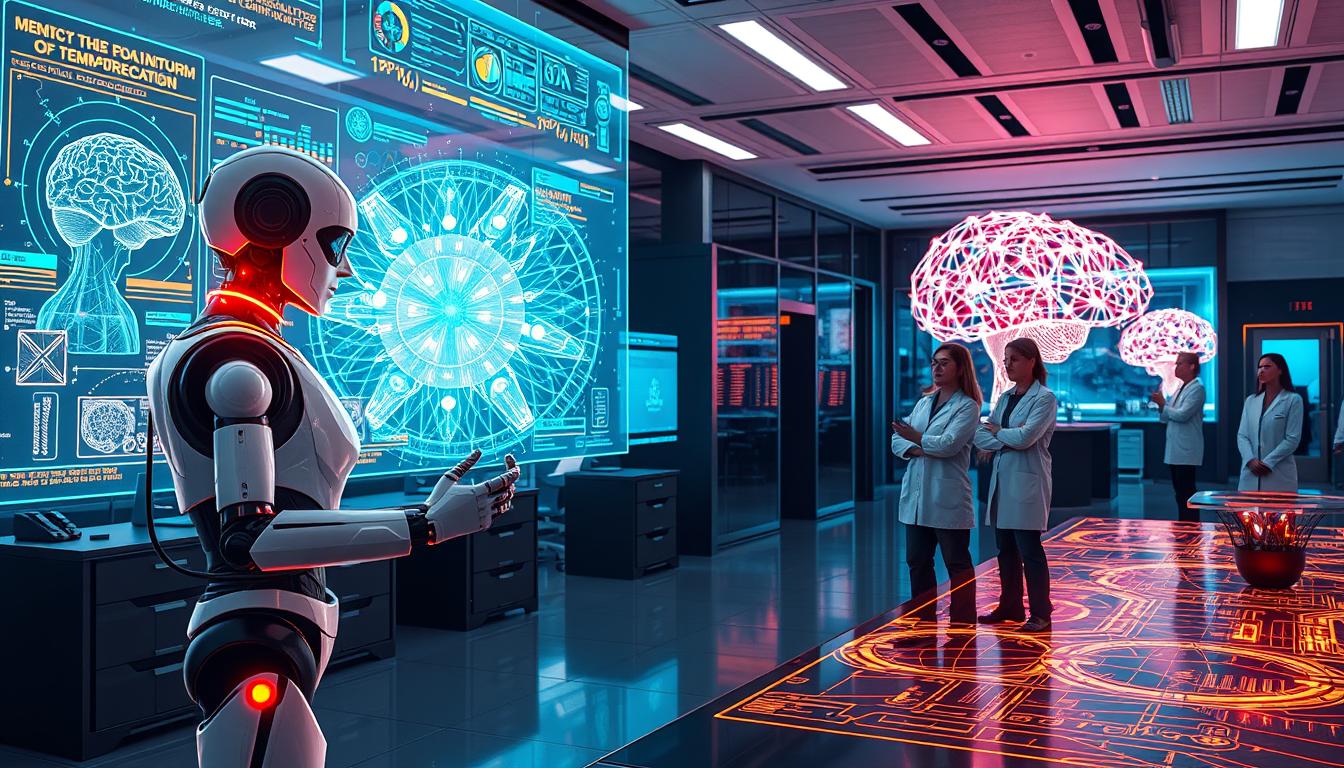
In scientific research, human-robot collaboration has changed the game. Collaborative robots, or cobots, are making a big impact. They improve laboratory automation and research efficiency.
Cobots work alongside humans, enhancing their work. They handle boring or repetitive tasks well. This lets researchers focus on the creative parts of their work.
By doing the mundane tasks, cobots make workflows smoother. They increase productivity in labs.
“Cobots have become invaluable tools in our laboratory, enabling us to push the boundaries of what’s possible in our research. The level of collaboration and synergy we’ve achieved with these robotic assistants is truly remarkable.”
Using cobots in labs boosts research efficiency. They let researchers spend more time on key parts of their work. This is crucial for experiments and analysis.
The role of cobots in science is set to grow. They combine human and machine strengths. This is changing scientific research, leading to more productivity, innovation, and discoveries.
Emerging Trends in AI Innovation
The world of artificial intelligence (AI) is changing fast. New trends are shaping the future of science and innovation. Quantum computing is one such trend, promising to change how we solve complex problems.
Quantum computers can solve some problems much faster than regular computers. This opens up new ways to explore and discover. Edge AI is another trend, where AI is used closer to where data is collected. This makes things faster, cheaper, and more secure.
Explainable AI is also becoming important. It makes AI systems clearer and easier to understand. Scientists want to know why AI makes certain decisions.
“The fusion of AI and quantum computing holds immense promise for accelerating scientific breakthroughs and driving innovation in ways we’ve never seen before.” – Dr. Emily Johnson, Chief Scientist at Quantum Innovations
AI working with humans is an exciting trend. This collaboration can lead to discoveries and innovations that are beyond what we can do alone. It combines AI’s smarts with human creativity and knowledge.

As these trends grow, the future of AI in science looks very promising. By using these advancements, we can achieve more and make progress faster.
The Future of AI in Science
Artificial intelligence (AI) is changing science in big ways. Soon, AI will help us make new discoveries and understand the world better. This will lead to amazing breakthroughs in many areas.
AI can find patterns and insights that humans might miss. It can look at lots of data and find connections. This means AI will help science move faster. It could change how we see the world, leading to new technologies.
AI will also help scientists work together more. It will break down old barriers and let people from different fields collaborate. This teamwork will be key to solving big problems like climate change and finding new energy sources.