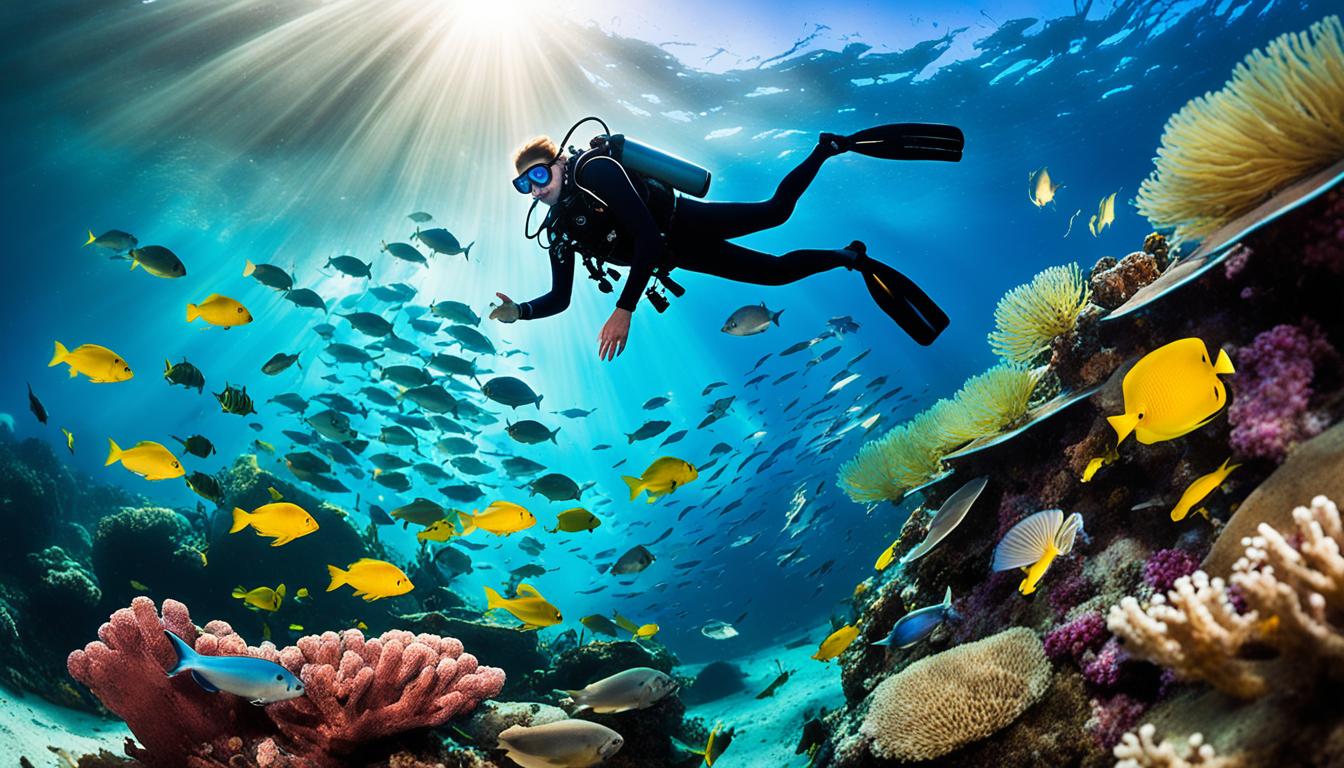
Start an exciting journey into the world of marine biology. This field takes you from the ocean’s depths to the colorful coral reefs. It’s full of wonders waiting to be discovered. Let’s dive into 10 interesting facts that will make you more curious and appreciate the ocean’s mysteries.
Learn about the amazing variety of marine life. See how creatures glow in the dark and how some survive in harsh places. Find out how the ocean helps our planet and how we’re working to protect it. Discover new research and careers that let you explore the ocean up close.
These 10 facts about marine biology are perfect for anyone interested in the ocean. They’ll make you more passionate about the sea and encourage you to learn more about this fascinating field.
Exploring the Vast Ocean Realm
The ocean covers more than 70% of the Earth’s surface. It’s a vast and captivating place full of wonders. From the shimmering surface to the deep, mysterious depths, it’s home to a wide variety of marine life.
Explorers and scientists are still discovering the ocean’s secrets. They reveal the intricate life that thrives beneath the waves.
Diversity of Marine Life
The ocean is full of life, from tiny plankton to huge whales. This variety of marine life is truly amazing. Every part of the ocean has its own unique creatures, each important to the ecosystem.
Importance of Marine Ecosystems
Marine ecosystems are not just beautiful; they’re crucial for our planet. They help control the climate, provide resources, and support many forms of life. Keeping these ecosystems healthy is key to our planet’s well-being.
Exploring the ocean helps us appreciate its diversity and importance. The ocean is full of wonders, inviting us to learn more about its aquatic world.
Science Unlocking Ocean Mysteries
The ocean is full of secrets waiting to be discovered. Thanks to ocean science and marine research, we’re slowly uncovering these mysteries. We’re mapping the ocean floor and understanding marine ecosystems. This work helps us learn about the ocean’s hidden wonders.
Tools like remote-operated vehicles (ROVs) and autonomous underwater vehicles (AUVs) let scientists explore the deep ocean. They capture amazing footage and gather important data. With advanced imaging and analysis, we’re learning about marine life, ocean currents, and coral reefs.

Exploring the ocean reveals new species and helps us understand marine food webs. We learn how the ocean affects global climate and supports life on Earth. The knowledge from ocean science and marine research is vital for protecting our oceans.
Underwater Wonders
The ocean is full of beauty and mystery, filled with creatures that amaze us. Bioluminescent marine life is one of the most stunning sights. These creatures glow on their own, thanks to special chemical reactions.
Bioluminescent Creatures
Seeing ocean bioluminescence is unforgettable. Under the water, you might see glowing animals. They light up for many reasons, like to catch food, scare off predators, or talk to friends. There are so many kinds of glowing sea creatures, each with its own light show.
Dinoflagellates and deep-sea fish light up the ocean with their glow. These creatures show us how life has adapted in the deep sea. Exploring the ocean, we find more about these glowing wonders and their amazing world.
Adaptations for Survival
In the vast ocean, marine life has developed amazing ways to survive. From sharks’ sleek bodies to whales’ thick blubber, these traits help them live well in the ocean.
Some marine creatures can glow in the dark, a cool trick called bioluminescence. The anglerfish uses this glow to catch food. Others, like the lanternfish, glow to talk to each other or hide from predators. This is key for surviving in the dark ocean depths.
But it’s not just about looks. Many marine animals have special ways to deal with the ocean’s changes. For example, clownfish live with sea anemones. The clownfish gets safe from the anemone’s stinging tentacles, and the anemone gets food from the clownfish’s waste.
These amazing ways that marine life has adapted show how tough and adaptable the ocean’s creatures are. By learning about these adaptations, we can better understand the ocean’s secrets.
Unraveling the Coral Reef Enigma
Coral reefs are some of the most fascinating ecosystems on Earth. They are full of life, from colorful fish to sea turtles. But, these beautiful places face many threats that put them at risk.
Threats to Coral Reefs
Climate change is a big threat to coral reefs. Rising ocean temperatures and acid levels can harm and kill coral. This makes them more likely to get diseases and destroyed.
Pollution from things like farm runoff and plastic hurts these delicate places too. Overfishing and harmful fishing can also upset the balance in coral reef communities. This can lead to fewer important species.
Coral reefs are not just beautiful; they are crucial for our oceans. They help many marine species, protect coastlines, and support people’s lives. We must work to save and restore these vital coral reef ecosystems for our planet’s future.
Marine Biology Innovations
The field of marine biology is always changing, thanks to new technologies and discoveries. One exciting area is sustainable aquaculture. It uses the latest research and methods to grow marine life in a way that’s good for the environment.
Sustainable Aquaculture
Sustainable aquaculture is changing how we get seafood. It uses marine biology innovations to farm fish and other sea creatures in a way that’s kind to the planet. This means using advanced water systems, renewable energy, and farming species that can handle ocean changes.
This approach not only gives us a steady and green source of seafood. It also helps with ocean technology and marine science progress. By mixing the newest marine biology research with advanced engineering, aquaculture can meet the world’s seafood needs without harming our oceans.

Careers in Marine Biology
For those who love the ocean, a career in marine biology is both rewarding and exciting. It offers many paths, from studying marine ecosystems to protecting endangered species. These jobs are crucial for understanding and protecting the ocean.
Marine biologists work in places like universities, research centers, and government agencies. They focus on oceanography, marine ecology, and conservation. Their tasks include fieldwork, lab research, analyzing data, and making environmental policies.
Working as a marine scientist is a thrilling choice. These experts study marine life, ocean ecosystems, and how they interact. They look into the behavior of sea creatures, check water quality, and see how human actions affect the ocean.
Conservation biology is another fulfilling path. These professionals aim to save endangered sea species and their homes, like coral reefs. They work with policymakers and communities to use the ocean wisely and create protected areas.
If you’re drawn to ocean science or want to protect its resources, marine biology has many opportunities. With a passion for the sea and the right education, you can start a rewarding career in this evolving field.
Ocean Conservation Efforts
The world is now more aware of the ocean’s importance. Efforts are being made to protect marine environments. Marine protected areas are key, where human actions are limited to help ecosystems recover and stay healthy.
Marine Protected Areas
These areas protect a wide range of marine life along coastlines and in the ocean. By limiting activities like fishing and pollution, they help ecosystems recover from human harm. This way, the ocean’s resources are saved for now and the future.
Government agencies, conservation groups, and local communities work together to grow the network of marine protected areas. This shows a global commitment to taking care of the ocean. As we learn more about the ocean’s balance, these areas offer hope. They show how working together can protect the ocean’s beauty.